- Summer.fi Newsletter
- Posts
- Happy New Year 🌞 A Clear Start to 2026 on Summer.fi
Happy New Year 🌞 A Clear Start to 2026 on Summer.fi

Betty
January 07, 2026
Happy New Year and welcome to 2026.
If last year was about proving onchain yield works, this year is about doing it properly.
Over the past few days, a clear theme has emerged across everything shipping on Summer.fi and the Lazy Summer Protocol:
Less noise. More discipline. Real alignment.
Here’s what matters as we kick off the year 👇
Do Less. Still Access the Best of Onchain Yield.
DeFi yield hasn’t slowed down it’s grown up.
What used to be “deposit and earn” is now a complex stack of lending markets, vaults, fixed-rate primitives, and institutional-grade credit. The opportunity set is bigger than ever but so is the operational burden.
Tracking rotations. Monitoring risk. Rebalancing without mistakes.
That premium disciplined allocation and risk management is exactly what the Lazy Summer Protocol is built to deliver.
The core idea is simple:
Do Less.
…and still benefit from the continued growth of onchain vaults.
The latest article breaks down:
Why vaults are becoming the default interface for yield
How automation beats manual yield chasing
What “boring, done right” looks like in practice
Read: “The Lazy Summer Promise: Do Less”
Staking, Alignment, and Long-Term Participation
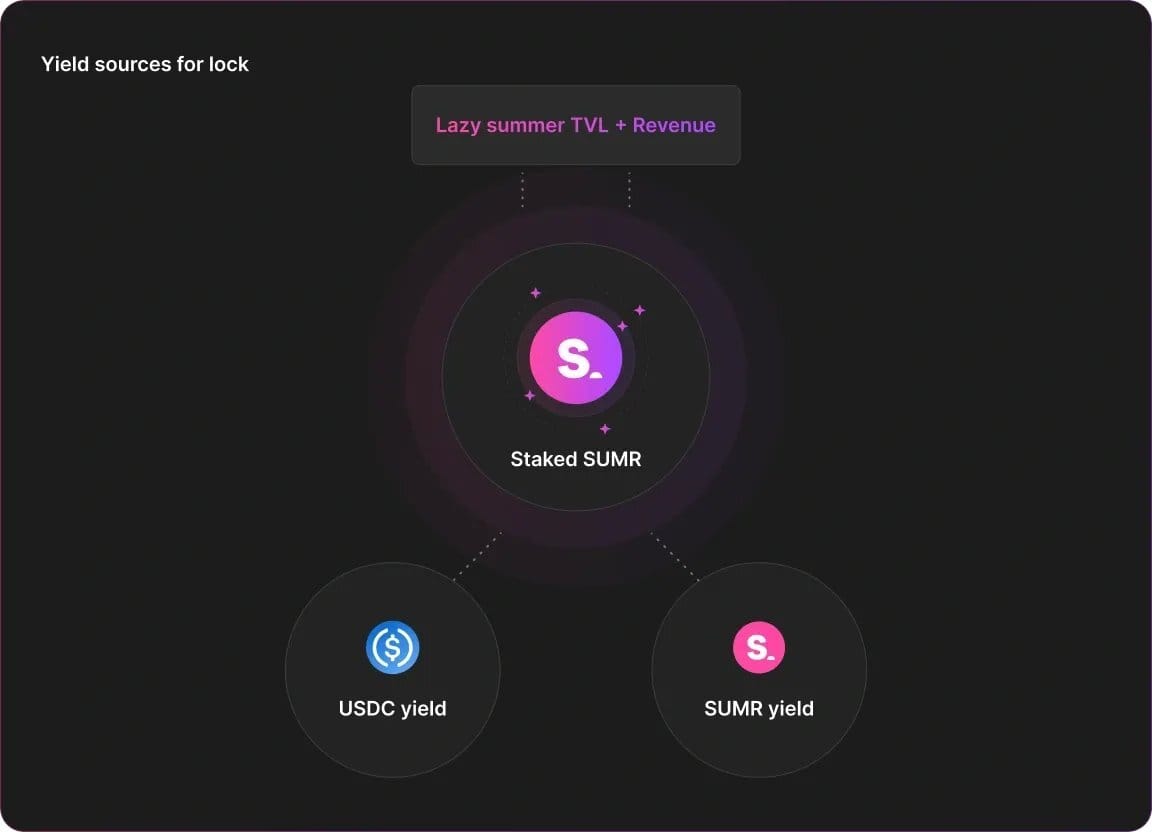
With SUMR Staking V2 now live, the mechanics of participation are clearer.
Staking isn’t framed as a short-term incentive — it’s a way to align with the protocol over time. Participants who choose to stake are exposed to:
Governance participation
Ongoing SUMR emissions
And USDC rewards are sourced from protocol revenue
Recent posts broke down the mechanics behind this in plain terms, focusing on how time, consistency, and reduced churn matter more than constant activity.
This is intentional design: long-term alignment over short-term optimisation.
Read the full blog on “How to Stake SUMR”
Yield Is a Risk Management Problem First
Chasing headline APY is easy. Managing withdrawals, liquidity, and concentration risk across changing conditions is not.
That’s why the Lazy Summer protocol treats yield as a risk problem first, optimization second.
Risk curation is handled by Block Analitica, one of the most respected risk intelligence teams in DeFi. Their role goes far beyond monitoring they actively shape how vaults behave as conditions change.
The new Balance of Risks series explains:
How deposit caps, diversification, and liquidity buffers are set
Why some high-APY strategies were explicitly rejected
How “flight to quality” reallocations protect users during volatility
How the framework evolves over time instead of staying static
This is what institutional-grade risk management actually looks like onchain.
Read: “Balance of Risks #1 — How risk is managed in Lazy Summer Protocol”
Governance Stayed Busy in December
Behind the scenes, December was dense.
The Lazy Summer DAO focused on:
Security posture
Accountability
Launch readiness ahead of SUMR’s next phase
If you want a clear picture of what was approved, rejected, and why — the December governance recap lays it all out, transparently.
Catch up: Lazy Summer Governance Recap — December 2025

Save the Date: January 21, 2026
One final milestone to keep in mind.
On January 21, 2026, SUMR becomes transferable.
The “Do Less” promise stays the same but with more upside embedded:
Access curated, automated yield
Participate in governance
Hold real economic alignment with the protocol powering it all
2026 is the year onchain yield stops being noisy and starts being disciplined.
Do Less.
Stay curious.
Build conviction.
Explore, engage, and grow with us.
Explore vaults: summer.fi/earn
Join the discussion on Discord
Keep an eye on the blog for deeper dives and updates.
Check out the forum
— The Summer.fi Team 🌞